“Dual extract” is printed on every bottle we sell. Here’s what it actually means, and why we do it.
Mushrooms are built differently
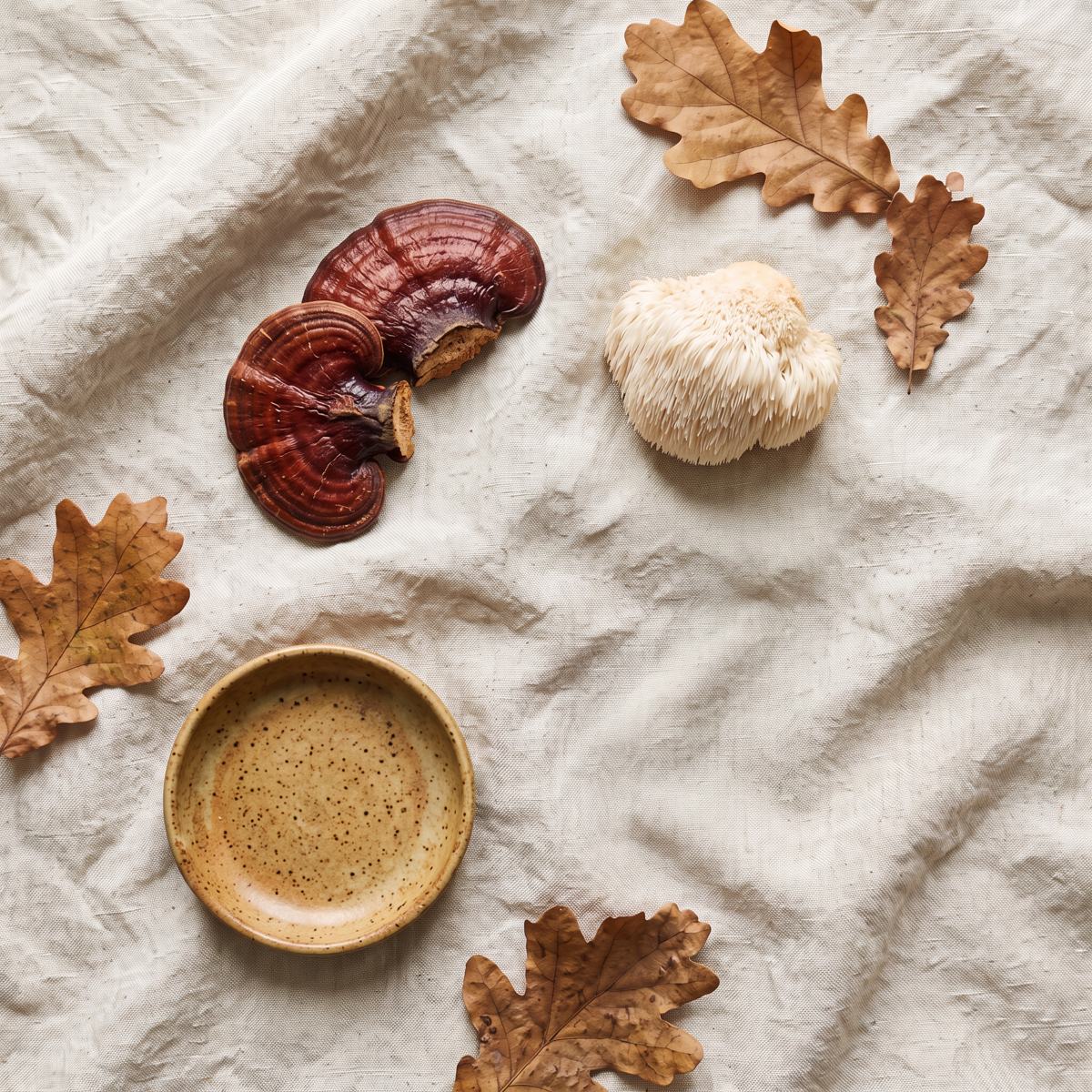
Plants build their cell walls from cellulose. Mushrooms use chitin, the same tough material found in insect shells and crab claws. Chitin doesn’t break down easily, which is why most mushrooms are cooked rather than eaten raw, and why simply grinding a dried mushroom into powder isn’t the same as extracting it.
Step one: hot water
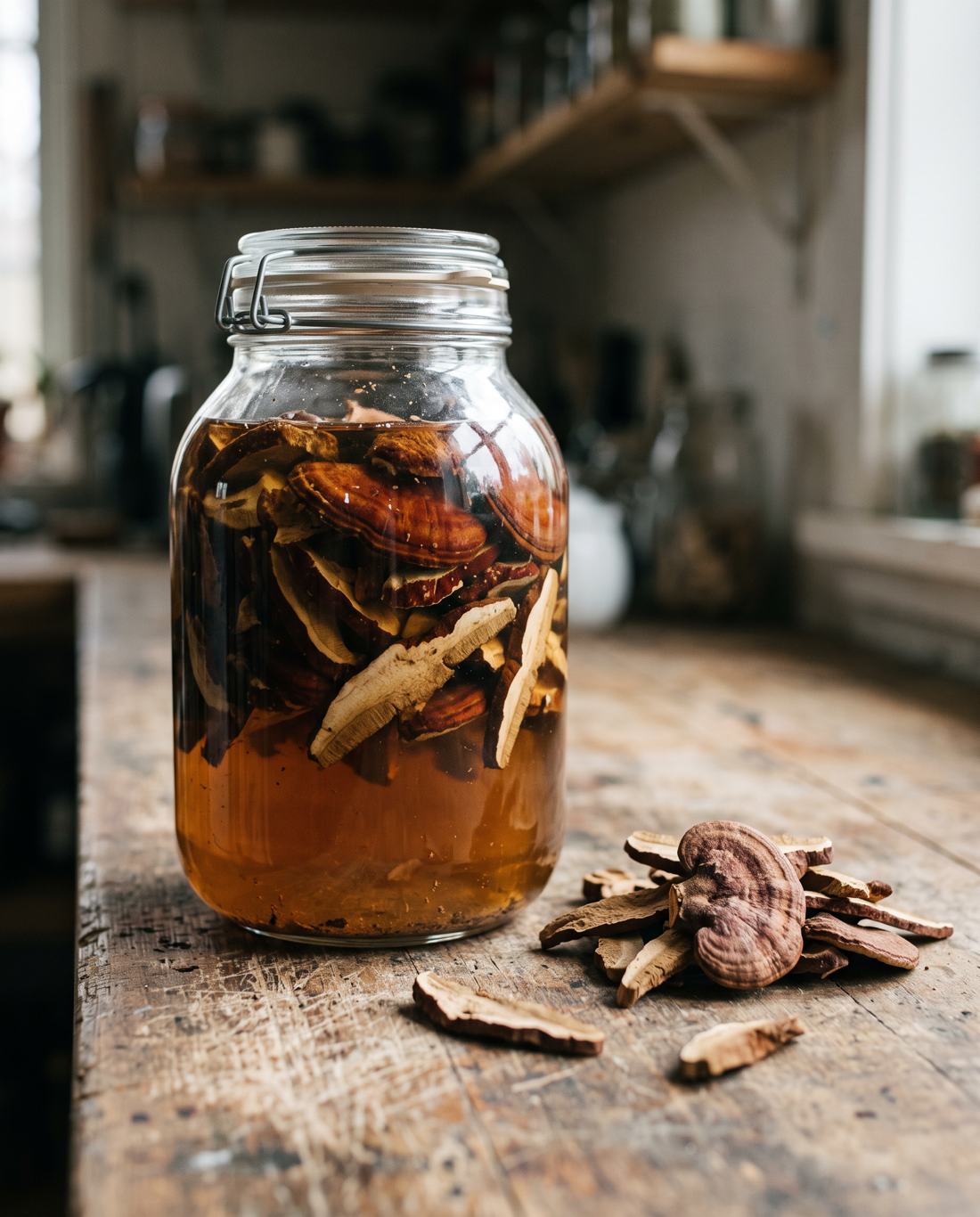
The dried fruiting bodies are simmered slowly in hot water. It’s the traditional way of preparing tough mushrooms such as Reishi, the same principle as a Reishi tea. Hot water draws out the water-soluble compounds, such as the polysaccharides that make up much of a mushroom’s structure.
Step two: alcohol
The same mushroom material is then steeped in alcohol. Some compounds, such as the triterpenes that give Reishi its bitterness, dissolve much better in alcohol than in water. A water-only extract would leave them behind.
Step three: combining
The two extracts are blended together. The finished tincture is about 25% alcohol, which also keeps it stable on the shelf.
What does 1:4 mean?
The ratio tells you how much mushroom went into the liquid: one part dried fruiting body to four parts liquid. In practice, each 1ml of our tincture is made from 250mg of dried mushroom. We put the ratio on every label because we think you should know exactly what you’re buying.
Fruiting body, not mycelium
Some mushroom products are made from mycelium, the root-like network a mushroom grows from, often grown on grain. Ours are made from the fruiting body, the mushroom itself.